Pressing Matters
Pressing Matters | College Cost, AI, and the challenges of aging farm equipment
Season 3 Episode 4 | 25m 45sVideo has Audio Description
Between tuition, housing and everyday living expenses, planning for college can feel overwhelming.
Between tuition, housing and everyday living expenses, planning for college can feel overwhelming. Jamie Mankiewicz looks into what it really costs to earn a degree in Michigan and where students can find serious savings.
See all videos with Audio DescriptionADProblems playing video? | Closed Captioning Feedback
Problems playing video? | Closed Captioning Feedback
Pressing Matters is a local public television program presented by WCMU
Pressing Matters
Pressing Matters | College Cost, AI, and the challenges of aging farm equipment
Season 3 Episode 4 | 25m 45sVideo has Audio Description
Between tuition, housing and everyday living expenses, planning for college can feel overwhelming. Jamie Mankiewicz looks into what it really costs to earn a degree in Michigan and where students can find serious savings.
See all videos with Audio DescriptionADProblems playing video? | Closed Captioning Feedback
Where to Watch Pressing Matters
Pressing Matters is available to stream on pbs.org and the PBS app.
Providing Support for PBS.org
Learn Moreabout PBS online sponsorship- Hi.
Welcome to "Pressing Matters."
Here's a look at what's coming up today.
What college actually costs versus what's printed on paper, the answers might surprise you.
Balancing humanity with technology, how students and universities are adapting to the rapid changes of artificial intelligence in the classroom and the workforce.
Dated equipment.
Farmers in Michigan are finding it harder to rationalize buying new equipment.
What they're doing to avoid costly upgrades and cope with a tough farm economy.
A nationwide shortage of hormone replacement therapy medications is being felt at local doctor's offices.
The FDA speaks out.
Plus, know before you go, with the election coming up, be prepared before you head to the polls.
Those stories next on "Pressing Matters."
(bright upbeat music) Between tuition, housing, and everyday living expenses, planning for college can feel overwhelming, but financial aid leaders say misconceptions about the cost of higher education may be keeping too many students from chasing their dreams.
Jamie Mankiewicz looks into what it really costs to earn a degree in Michigan today and where students can find serious savings.
- [Jamie] For many high school seniors and their parents, looking at the cost of college can trigger instant panic, commonly known as sticker shock.
But experts warn, don't confuse that number with what you'll actually pay out of pocket.
- For years, it's been widely known that in general, both students and parents over-inflate the actual net price of college attendance.
And that's very, very problematic, not just to young adults and their career dreams and what might come of their entire lives and careers based on that perception.
- [Jamie] Dan Hurley leads the Michigan Association of State Universities.
He says the average net price at Michigan's public campuses is about half the advertised rate.
But CMU Financial Aid Director Sarah Kasabian-Larson says students and parents need to do their homework and budget for expenses beyond tuition.
- Typically, you'll see it through the cost of attendance.
So if you were to just go on our website, search that, you'll see an outline of what it typically would cost to go to school.
But the cost of attendance is not the actual cost to attend CMU or another school.
It is the financial aid budget.
You can kind of think of it as an umbrella.
We can't allow financial aid to go above and beyond that umbrella.
And so it is a guideline to help us with the awarding and maximizing aid for a student.
So ,when a student wants to figure out what their actual cost is, don't look necessarily at the cost of attendance or the sticker price.
You want to actually look at the charges that you have minus your financial aid.
- [Jamie] That means early financial literacy is critical.
- Living off campus sometimes is more expensive than living on campus.
And so understanding the choices that you make can make it more expensive to be here.
And so if we can sit down, budget, plan for the future, we can really fill those gaps.
- So, where should prospective students even begin?
Financial aid experts across the board agree.
File the FAFSA.
That's the Free Application for Federal Student Aid.
The online form is now streamlined and it securely pulls tax information directly from the IRS.
It opens each year on or around October 1st.
Advisors urge families to submit as early as possible in order to best benefit from institutional, state, and federal dollars.
- If you are able to file as soon as it opens each year, then you can maximize your aid.
- [Jamie] Filing early unlocks a growing number of state programs, like the Michigan Achievement Scholarship, which provides up to $5,500 a year for eligible high school graduates.
Michigan Reconnect offers tuition-free community college for adults 21 and up.
And high schoolers have opportunities to bank credits before paying a cent of college tuition.
- And so now there is a lot of students that can take dual enrollment classes in high school, and when they enter as a freshman into a community college or a public university, they can do so with a lot of credits that will transfer and alleviate the number of courses and credits they need to take at the post-secondary level.
And that certainly will save some dollars as well.
- [Jamie] Tracking down local scholarships can provide some critical cash.
- Your community foundation most definitely has scholarships available.
I have heard from multiple community foundation scholarships that sometimes they have money that just sits there and doesn't go awarded.
And so just knowing where to go to look and find this information will then equip you to take those next steps with the application process.
- [Jamie] Universities are facing new challenges as well.
State fiscal reports show Michigan's public institutions are facing severe budget restraints.
Universities are also dealing with a number of issues impacting enrollment.
- There's essentially two streams of revenues into universities.
One is state funding for operation support and the other one is tuition.
And when the state doesn't do its part, they're essentially shifting the cost to students and families.
The nation's largest high school graduating class was in the Spring of 2025, simply last year.
And there's all the discussion about the enrollment cliff is here.
The enrollment cliff in Michigan started 19 years ago in 2007.
And so there's been fewer and fewer high school graduates.
And so that has been a challenge.
Obviously, fewer tuition-paying students.
- [Jamie] Plus, recent visa restrictions have cut into international student enrollment, another crucial revenue stream.
- We have historically been a top 10 state in international enrollment and that provides so much value.
All things international, students, researchers, professors is being significantly negatively impacted, and that will have a fiscal impact on the universities.
And not just the large ones, but all of the universities could see significant impacts there.
- [Jamie] While administrators manage monetary issues of their own, recent graduates are navigating their own financial challenges.
After earning her social work degree at Central Michigan University last Spring, Jackie Salladay is balancing her master's at Saginaw Valley with a full-time job and weekend shifts.
- So I pay one and then I use loan money for the next one.
And then I pay one and then loan money for the next one.
Just trying to keep that going so I can not have $50,000 in debt when I'm done.
I'd say it's exhausting and a lot of pressure.
- [Jamie] Financial aid directors say families don't have to navigate the cost of college on their own and recommend leaning on your campus financial aid office for help.
- They can do a virtual appointment, they can do a phone call, they can do an actual appointment, and they are there to help students through all aspects.
They can work through budgeting, they can talk about financial aid, and maybe if there's any missing documents that are causing delays in aid being paid out to a student, they can work through payment plans or coming up with a plan for a student where they're using the different resources that are available to help cover that out-of-pocket costs.
- [Jamie] And while the financial stress today may feel like a difficult hill to climb, advocates maintain, over a lifetime, the degree is worth the sacrifice.
- The return on investment for a Michigan Public University degree over a 40-year career is now over $2 million, and that is inclusive of the cost of attending all of our Michigan public universities.
That is a profound return on investment.
- Navigating college affordability can be complex, but you don't have to do it on your own.
Start by creating a federal student ID at studentaid.gov and file a FAFSA form.
To explore state programs like the Michigan Achievement Scholarship and Michigan Reconnect, visit the website on your screen.
As college costs climb, universities and students are also adapting as fast as they can to rapid changes brought on by artificial intelligence.
AI is finding its way into virtually every industry.
Leaders agree, most careers will evolve with it.
Some could be eliminated.
Staying on top of the changes while staying grounded in humanity is a balance for students and leadership in higher education.
- Speaking of regulations, there has been some regulations in the United States.
I wouldn't say everyone needs to go into AI, you know, that's way overblown, but like, you can go into any major that you want to go into college, don't be closed off to AI.
- [Stephanie] Opening up and having meaningful conversations about artificial intelligence is the focus for students meeting in this classroom.
- We talk about the week's developments in AI, both good and bad.
This week is a lot of bad stuff, but it dips and flows every week.
So, we educate everyone that comes to our meetings about AI and what's going on in the current world.
And then we run workshops every week where we learn how to use different tools and we learn how to apply that to our personal and professional lives.
And our main focus is really just developing students at Central Michigan for their future using AI because it's becoming very prominent.
- [Stephanie] Central AI is a registered student organization at Central Michigan University.
It's been around for about a year now.
Student president Adam Place says he has already benefited in the workforce from his experience with this group.
- One year ago, I really didn't know anything other than I used ChatGPT here and there in high school, but now I know quite a bit about a lot of different platforms.
I think that's probably the biggest positive that I could draw from most of this is just everything culminates to this bigger breadth of knowledge, which I think the more you know coming out of college is obviously going to set you apart.
And I think employers are looking for these AI skills more and more.
It got me an internship this past summer, which what set me apart was this very club.
That's what they told me in the interview.
- [Stephanie] With students encountering AI before they even enter the workforce, keeping up on the constant changes and learning how to best bring it into classrooms is a priority for higher education.
- For us, it's been just a great journey of trying to understand how it impacts teaching and learning, how does it impact research, the ethical implications of it.
And so we've been in a lot of dialogues around it.
We have implemented secure technologies, secure AI.
We've been really focused on how do we do training and programming around it, and then trying to understand the curriculum side.
We're trying to incorporate it where it makes sense, but also make sure our students understand when it's not right to use.
We don't want to shortcut education.
- [Stephanie] Among his many roles at CMU, Ben is also a special advisor on AI.
He meets monthly with leaders from other universities to share knowledge and work together in how to add it into the classroom.
- There's quite a few going through the curricular process right now, but as of right now, we do have a minor in computer science for AI to build the skills up needed.
So, anyone in the College of Science and Engineering or anyone across campus can take those from my understanding.
We have an AI certificate in the teacher area.
We have classes in the College of Business, multiple classes at the undergrad, grad level.
We have a first-year experience class being worked through.
We have a major being looked at and working through the curricular process.
- [Stephanie] Adapting and evolving with technology and job market demands is nothing new to universities.
It's the speed at which AI is prompting change that is essential in shaping the leaders of today for tomorrow.
- A university is always changing its programming.
It continues to adapt what degrees it offers and why.
You know, some of our heaviest degrees right now are on some of the healthcare because there's a strong need in those spaces.
And yeah, they also want to incorporate AI into those healthcare fields.
- [Stephanie] Now, according to the US Bureau of Labor Statistics, over the next 10 years, AI is expected to drive job growth in technical sectors while possibly reducing demand in office and other customer support type roles.
While this chart is just a snapshot, most agree, AI will be integrated across professions and daily life in general.
But as important as understanding AI is, so is remembering the necessity of human interaction and connection.
- Judgment is still a human thing that we have to make our own judgment even if AI does a lot of the automation.
Who becomes our judges?
Well, it's the best lawyers and they have to think through the problem and show the empathy, show both sides, understand both sides.
Same thing with AI in this world.
I mean, how do we make students resilient?
How do I have my own kids become resilient where they can be adaptable?
For me, it's are they asking the right questions?
I think that's such an important part in an AI world.
In an AI world, you can get answers really fast, but are you asking the right questions?
You come to college, you're learning how to communicate, work with others, showing your own empathy, you know, all these, we used to call them soft skills, I guess when I was going through school.
Now, they call them resilient skills or durable skills because of AI.
Just because we have AI, we've still got to use our own thinking and judgment and be able to demonstrate that thinking process.
Don't let the AI think for you.
It's just a tool.
We've got to treat it as a tool.
It's got good and bad things.
- [Stephanie] Artificial intelligence is a tool.
Knowing how to use it and when has never been more important, especially as students and universities prepare to educate the next generation of workers and leaders.
- Biggest piece of advice I would give is just focus on knowing AI because it's going to set you apart.
It's going to be this thing where you put it on your resume as an AI skill, as you're a part of an AI club, or whatever, that we have here.
Anything like that is going to set you apart.
There might be some jobs that are eliminated, but there's also going to be new ones.
- CMU's history is always about creating lifelong learners, trying to make sure people continue to build those learning skills.
That's really what the degree is, a demonstration that people know how to learn.
And I think with all these radical changes in pretty much every industry brought on by technology, that ability to adapt and keep learning and keep changing and adapting is more important than ever.
- Ben also says that while AI can do a lot, safeguards and security measures need to be a top priority.
He says the university has also stepped up their efforts with security updates happening more frequently than they used to in the past.
Well, farming is expensive, especially this time of year with rising costs of fertilizer and fuel.
Equipment prices have also reached historic highs, and that's adding pressure on those in the farming industry.
Some Michigan farmers are relying on decades -old machinery to get the job done.
WCMU's Emma George-Griffin explains.
- [Dennis] Some of the equipment, we'll never use again, but it's amazing how if I need a part or something that's similar that'll work on even a different brand, I'm able to go and find something that'll work.
- [Emma] There are piles of old equipment all around Kellogg Family Farms.
Dennis Kellogg uses those parts to help repair his decades old machinery.
Kellogg says he likes working on older equipment.
He also says it's easier and cheaper to repair tractors and combines that aren't computerized, but in recent years, relying on older machines has become more of a necessity.
- A few years ago, we were getting $14 to $17 a bushel for our soybean.
Today's price is around the $12 range.
- [Emma] That's just one example of how farmers aren't seeing big profit margins in recent years.
With trade uncertainty and rising costs, producers don't have much more to spend on machines that can cost upwards of $1 million.
- We're right on that borderline of where we could justify a lot newer equipment, but you only use this equipment maybe six weeks out of the year, and then the rest of the time it sets idle.
And so it's hard to justify the big investment.
- [Emma] Kellogg's newest tractor is from 2003, and he's still using a combine from the 1970s to harvest his soybeans.
- To get it in good operating condition, I spent the summer rebuilding it and then I replaced all the bushings that run the shaking part of it because they were gone.
And then anything else I saw that needed to be repaired and had to do a little bit of brazing work and a little sheet metal work.
And then in the end, you use good old duct tape.
- [Emma] Kellogg says he saved lots of money over the years by fixing up his old combine with mostly spare parts from his stockpiles.
That's something he's been doing for most of his life, but many other farmers rely on repair shops to fix their farm equipment.
- This is our shop.
I work on ag equipment, heavy equipment, compact tractors, lawn mowers, just about anything except for on-road vehicles.
We like working on combines probably the most.
- [Emma] According to Crowell, one reason that farmers are using older equipment is to avoid climbing prices.
- The other reason is, you know, if you have a piece of newer equipment, your sensor that might fail on that could be 400 or 500 bucks where you probably don't have those sensors on this older equipment.
It's just a little more reliable for some of the smaller farms in the area, and there's big farms that use them, too.
- [Emma] Old or new, prices on everything seem to be going up.
Crowell also says parts have been harder to get a hold of.
- It's all smaller farms for the most part.
We, in general, have a good relationship with everybody.
When you get into scenarios where, you know, money's tight and you know times are tough, you have that conversation with them and that kind of plays out on how things are going to be repaired.
- [Emma] Parks and Crowell say they work with a machine shop that helps them give customers lower prices on repairs.
- We have a tractor sitting behind us over here that we had a valve that needed repaired, and we could have it machined for a couple hundred bucks or he could buy a new one for $2,500.
- [Emma] While price hikes have had some negative effects on their business, Crowell says it's actually been driving more farmers to smaller shops like his who offer flexible pricing.
- There has definitely been a boom for, what you would call independent or a shade tree-type repair shop compared to a dealership in the last five years.
- Sales on tractors and combines declined by more than 20% this year.
That's according to data from the Association of Equipment Manufacturers.
Drew Kinsey is an Agriculture Research Analyst at the University of Missouri.
While more farmers have been relying on older equipment, it's been a trend for years.
- [Drew] If we go back 50 plus years ago, then it was much more common for, you know, every farm up and down the road to have new equipment.
- [Kinsey] He says until the late '90s, technological advancements made other machines obsolete.
Now, Kinsey says even decades old machines have the bare bone capabilities needed to farm.
- [Kinsey] Rather than say, "I need a tractor, I have to go to the dealership and buy a new one," you can go back and say, "Well, you know, this is how much power I need.
This is the type of features I need to do what I need to do.
This is the price point I'm looking at and this is the type of quality piece of equipment I'm looking for."
And then you kind of have that whole back catalog of equipment to choose from.
- [Emma] Many farmers take advantage of this.
Bob Walton farms hay and beef in Rosebush.
He says his main combine is nearly 20 years old.
He says repairs on that machine are more straightforward than on his updated equipment.
- We have two newer John Deere tractors, a 7200R and a 6150R, and we bought both of them used.
Every problem we've had with either tractor has been the computer.
It isn't a matter of fixing something, it's a matter of replacing something.
- [Emma] One of those options is a lot cheaper than the other, especially if a farmer knows how to fix something themselves.
- One of the biggest challenges is the fact that some of our older tractors, the controls were completely different than our newer tractors.
You know, the older tractors, we all had a lever we moved.
Now, we've got little tiny switches and it's real easy to hit a switch and not intentionally hit that switch.
It happened to me once.
I locked all my hydraulics out.
- [Emma] The learning curve can be steep for farmers switching to computerized equipment, but it can get the job done faster.
Every farmer's needs are different, and some can justify the bigger purchases, but some have to get crafty.
Either way, Kellogg says it all comes down to getting the job done.
- When a farmer wants to harvest, you think about dependability.
Is the machine dependable enough to get you through the season?
And that's what we all worry about.
- Thanks, Emma.
The FDA is monitoring reports of shortages affecting hormone replacement therapy medications.
The shortage is being felt nationwide, including here in Central and Northern Michigan.
The Estradiol transdermal patches, or those estrogen patches, are mostly impacted.
Demand for the products nearly doubled after last year's decision to remove black box warnings, giving women more treatment options for perimenopause and menopausal symptoms.
The FDA says it's offering assistance to the six manufacturers working to increase production of the patches, but, it cautions, some efforts may take more time because the patches require specialized equipment and manufacturing processes.
The midterm elections are just around the corner, and here are a few important reminders before you cast your vote.
Now, by law, voters who do carry photo ID must present it at the polls.
Now, those include a driver's license, federal, state, county, or local government-issued photo ID, a US passport, military photo ID card, Tribal photo ID card, an educational institution ID, or a concealed pistol license.
If a voter does not have photo ID or forgot to bring theirs with them, you can still cast a ballot, and if that happens, you sign an affidavit stating that you are not in possession of a valid photo ID.
Once the affidavit is signed, you can cast a ballot which will be counted with all the others on election day.
And some other important reminders.
Wearing campaign apparel is off-limits.
Hats, pins, stickers, or shirts supporting a candidate or ballot measure are not allowed inside or within 100 feet of the entrance.
You are also not allowed to hand out or carry campaign flyers within that 100 feet buffer zone.
And finally, it's against the rules to take any photos or videos inside the voting arena.
Of course, you can snap that "I voted" selfie.
Just be sure to take it outside the polling area.
Now, polls remain open until eight o'clock in Michigan.
And for polling locations and accessibility resources near you, head to wcmu.org.
And thank you so much for watching tonight and for your continued support for public podcasting.
We'll see you again soon for another edition of "Pressing Matters."
(exciting upbeat music)
 New
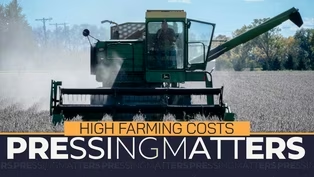
Pressing Matters | Aging Farm Equipment
Video has Closed Captions
Clip: S3 Ep4 | 6m 43s | We explore how some Michigan Farmers are relying on decades old equipment to get the job done. (6m 43s)
 New
Video has Closed Captions
Clip: S3 Ep4 | 6m 39s | Artificial Intelligence is transforming technology and industries at rapid rates, we explore. (6m 39s)
 New
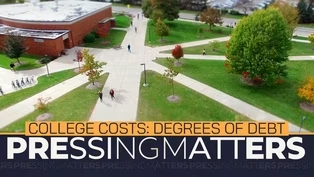
Pressing Matters | College Cost
Video has Closed Captions
Clip: S3 Ep4 | 7m 10s | Between tuition, housing and everyday living expenses, planning for college can feel overwhelming. (7m 10s)
Providing Support for PBS.org
Learn Moreabout PBS online sponsorship New Episode
- News and Public Affairs

Top journalists deliver compelling original analysis of the hour's headlines.
 New Episode
- News and Public Affairs

Today's top journalists discuss Washington's current political events and public affairs.

 New Episode
 New Episode
 New Episode
 New Episode

 New Episode
 New Episode




Support for PBS provided by:
Pressing Matters is a local public television program presented by WCMU